Norwalk Estate Planning Lawyer Answers: Is A Will Enough?
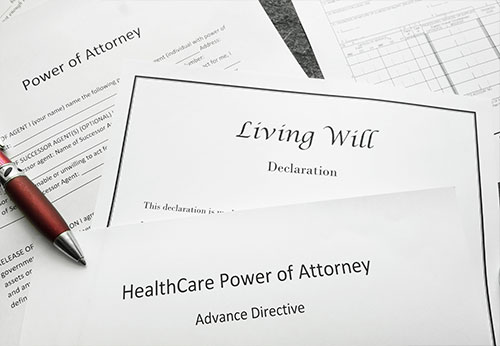
Do you have an estate plan in Norwalk? Is it just a will? A California estate planning lawyer from the Law Office of Rebecca Sommer explains when that might not be enough.
Estate planning is a legal process most Los Angeles residents are more likely to associate with Beverly Hills than gateway cities like Norwalk. People assume, for understandable reasons, that only the wealthy need to worry about their estates and legacies. While it is true that the larger the estate, the greater the need for careful planning, there is still a baseline that virtually every family should complete, including those in Norwalk.
Most folks are aware of this, but they often get the baseline wrong. You might, for example, assume that a will is all you need. In some cases, in terms of distributing your assets after death, you might even be right. But as far too many families in Norwalk learn after the death or incapacitation of a loved one, a will is sometimes not enough to prevent problems or conflicts.
Here at the Law Office of Rebecca Sommer, as an estate planning attorney, I am committed to helping you understand why those problems occur and how to avoid them. This understanding is vital, as it empowers you to take control over your legacy and the fate of your family, while also helping to even the playing field for communities in cities like Norwalk.

Call For A Free Assessment Of Your Needs | (657) 210-3722
When Is A Will Not Enough Estate Planning?

In Norwalk, an increasingly large percentage of families are blended, meaning you might have children from several marriages or relationships. Such a family situation can quickly complicate your estate. Nevertheless, in theory, if you have planned ahead with the help of an estate planning attorney, a good enough will can handle such situations.
A will, unfortunately, only works once you are dead, however. Which means it is worth no more than the paper it is printed on if you become incapacitated. If you can no longer make decisions for yourself, your will cannot help a loved one handle your finances, or provide instructions to doctors and healthcare professionals.
Additionally, a will has no power over time; it works once, when you die. Once it has been resolved and the money or property distributed according to your wishes, the will’s power to enact your wishes or protect your loved ones is over. Thus, a will is inherently limited, especially when it comes to securing your legacy.
What Estate Planning Alternatives Might You Need Alongside Your Will?
Even if you have a traditional nuclear family, grown-up children with no grandchildren, a single house in Norwalk, and no debt, a will is not the only estate planning document you need. In addition, if you want to have an enduring legacy or offer support for future generations or loved ones with special needs, for example, you may want to look into some additional estate planning measures.
Powers Of Attorney
With improvements in modern medical technology, we live longer and longer lives. This is wonderful for giving us more time with those we love, but it also increases the chance that you become incapacitated before you go. You can become incapacitated or unable to make decisions at any age. From head trauma in a car accident to dementia in a nursing home, you cannot anticipate when or how, but you do get to decide what happens and who to trust.
Powers of attorney are estate planning documents that enable certain specific individuals to make decisions for you when you are incapacitated. They come in several forms, primarily financial or medical, and can be made specific or general depending on your needs and the level of trust you place in the person(s) handling them.
Without these documents, your loved ones may have to go to court in Norwalk to obtain the right to make the decisions, which could end up making the wrong choice, favoring a relative you would never have chosen over a friend you would trust wholeheartedly.
A Living Will (Advanced Healthcare Directive)
A living will is even more direct in expressing your wishes, especially medical or end-of-life decisions. This document lays out your preferences on questions about life support, end-of-life care, surgical interventions and more. If you are involved in an accident, develop a debilitating condition, or are put on ventilation, this document speaks for you when you cannot.
It also takes these critical decisions out of the hands of your beloved relatives, family, and friends. By explicitly laying out your wishes, the living will avoids that responsibility falling on any shoulders but yours. Without one, your medical situation could also become a source of guilt, disagreement, or even legal conflict between surviving relatives.
Trusts
When a will does not go far enough, a trust can often go the distance. By placing assets or money into the trust and clearly outlining rules for how it should be used or distributed, trusts allow you to do virtually anything with your estate, including over an extended timeframe.
One typical example that many families in Norwalk will run into is how to help a family member with special needs. If a loved one is on government benefits, leaving them a large sum could be irresponsible, not just because of how they might spend it, but also because the government might take away their benefits due to the size of the gift. A special needs trust handles this neatly, putting the money aside for their care, without the individual ever owning it.
Call For A Free Assessment Of Your Needs | (657) 210-3722
Living In Norwalk With Nothing But A Will… Or Less?

The Law Office Of Rebecca Sommer | Protecting Your Family And Wishes With Careful Estate Planning
If you have no estate plan in place, it is time to work on your will. But if all you have is a will, you may also need to find out if your estate needs more documents or protections. In Norwalk and throughout California, there are only two ways to find that out for certain. And one of them is to die or become incapacitated and see how badly things go.
The other is to speak with someone like me, an estate planning lawyer with experience working with Norwalk families. I will gladly review your current plan and give you a free assessment of your needs. All you need to do is reach out to my office by calling (657) 210-3722 or contacting me online.


